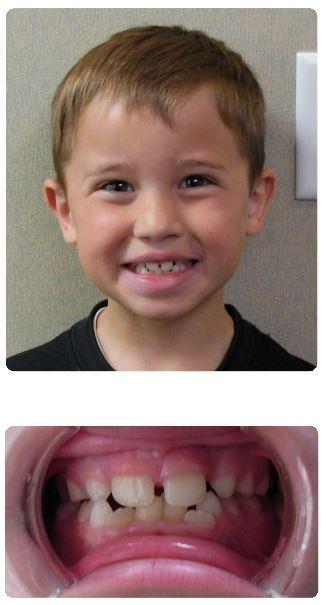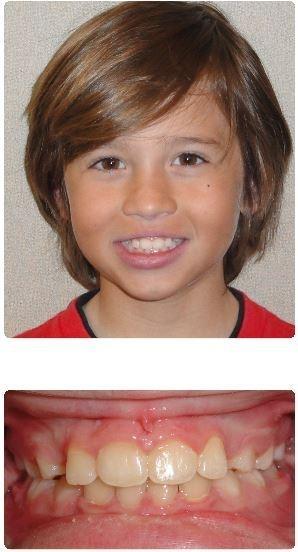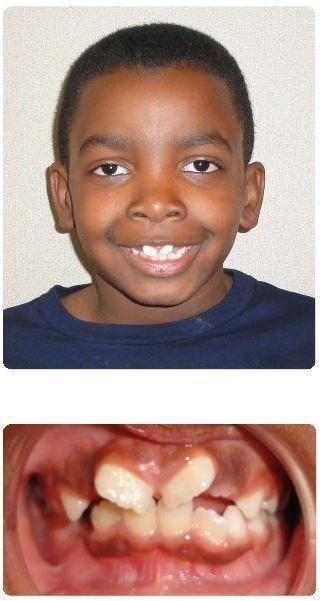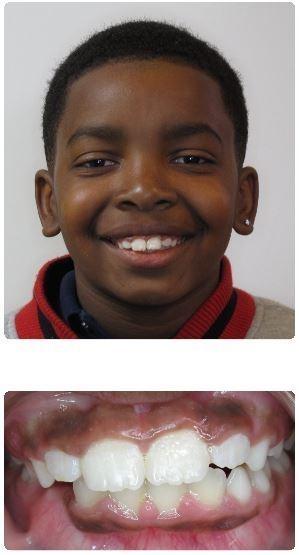
Early Childhood Orthodontics Phase I
 Braces used to be the realm of teenagers only, a rite of passage starting at about age 12. But today, early orthodontic intervention is a vital tool for catching problems with the jaw, face, and teeth before they become more severe. Not only that, but early childhood orthodontics allow teens to spend less time in braces, which helps enhance their self-esteem.
Here are a few conditions that may warrant early childhood orthodontics:
- Severe crowding of baby teeth
- Difficulty chewing or eating
- Severe crossbite, overbite, or underbite
- Missing baby teeth or wide spaces between teeth
- Symmetry or proportion problems with jaw, teeth, and face
- Protruding teeth
- Mouth breathing
How Early Childhood Orthodontics Work
When your child is six or seven years old, schedule an orthodontic consultation to determine whether your child would benefit from early orthodontics. Your child’s jaw, facial profile, and teeth will be evaluated for symmetry, overcrowding, bite issues, teeth alignment, and other issues. If your child is a good candidate, he or she can begin phase I of orthodontic treatment at around age eight, continuing phase II in full braces after age 13.
Dentists and orthodontists use a variety of tools in early orthodontic treatment, including both removable and non-removable oral appliances. Your child may have space maintainers, palatal expanders, aligners, or braces, depending on their individual needs.
Benefits of Early Childhood Orthodontics
 Every parent wants what’s best for their child’s health, teeth, and appearance, and sometimes that means earlier orthodontic treatment. Known as interceptive phase I treatment, braces for children ages seven to 11 can serve a wide variety of important purposes, including:
- Prevents overcrowding of permanent teeth. If baby teeth are not leaving enough room for permanent teeth, tooth extraction or a lengthy orthodontics treatment may be necessary in the teenage years. Since most children lose all their baby teeth by age 13, taking advantage of this window is an effective way to ensure that permanent teeth aren’t overcrowded.
- Improves facial and jaw symmetry. Correcting misaligned teeth can greatly improve a child’s jaw/facial profile and bite before the teen years.
- Fixes bite problems early. If not caught early, overbites, underbites, and open bites may worsen over time. To prevent these conditions from worsening, your dentist can manipulate the jaw structure while it is malleable.
- Corrects problems with speaking, chewing, or eating. Misaligned teeth and overbites can prevent children from enunciating words clearly, which can impact their performance and confidence in school. Correcting problems in the mouth can also protect teeth from uneven wear and encourage healthy gums.
- Reduces time in braces in teenage years. Most kids get braces for years just when they’re feeling more self-conscious about their appearance. With only about half as long as a teenager, they’ll be the envy of their peers.
Schedule a Consultation Today
Interested in learning more about early childhood orthodontics? Call our office today to learn more about how we can help your child get an early start on a healthy, beautiful smile.